What women are rarely told
“It’s just aging.” “Your tests look normal.”
Those were the answers women kept hearing. Meanwhile, getting dressed, washing their hair, reaching into a cupboard and finding one comfortable sleeping position had quietly become a daily calculation.
“Your shoulder is not imagining this,” Linda said gently.
“Let me show you what may be changing.”
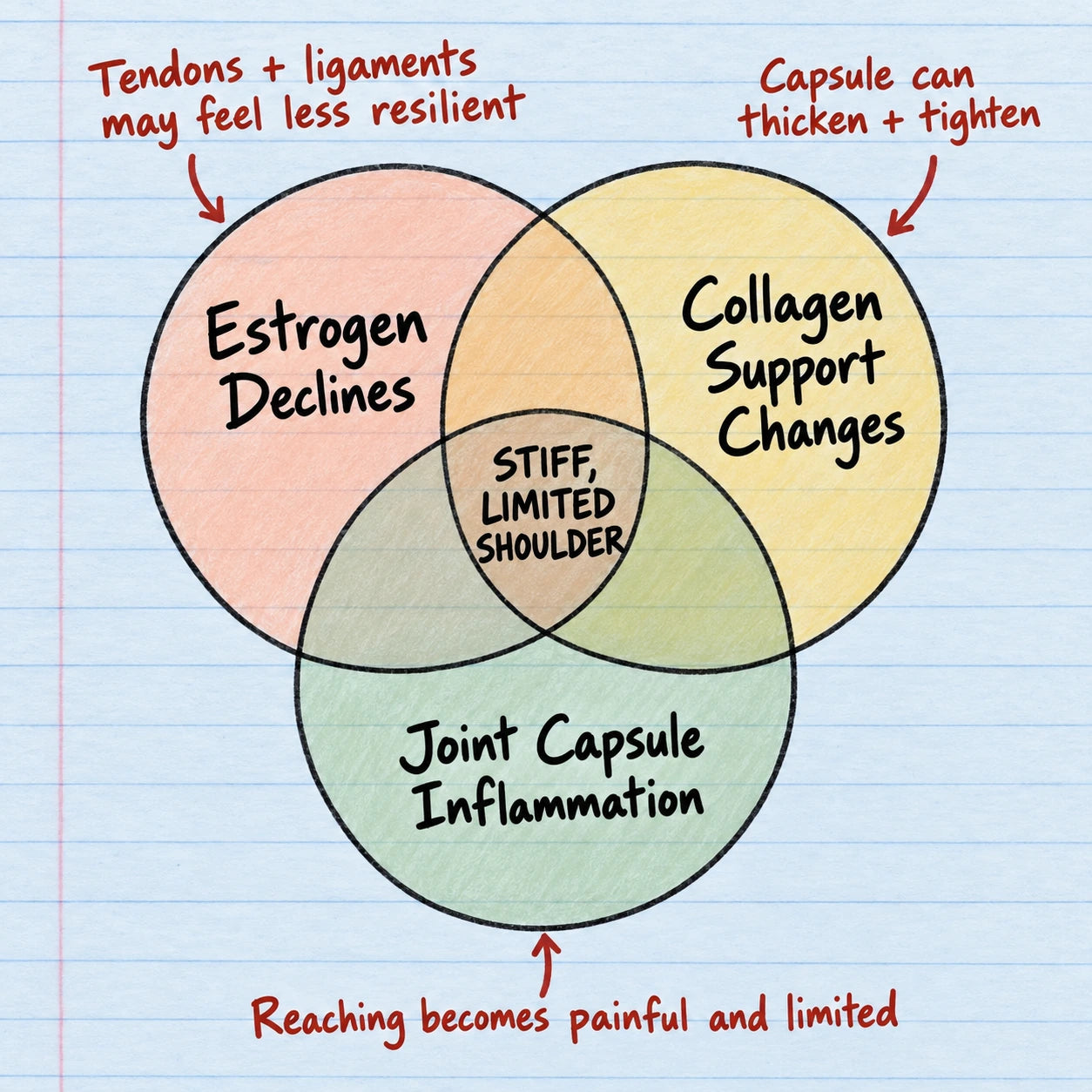
First, estrogen declines during menopause. That shift can affect the environment around collagen-rich tendons and ligaments.
Second, collagen support changes. The tissues that guide and steady the shoulder may feel less resilient than they once did.
Third, a frozen shoulder involves inflammation inside the joint capsule. That capsule can thicken and tighten, leaving less room for the joint to move.
“So this is more than a sore muscle?”
“Exactly. The tissues around the shoulder and the joint capsule itself can change, which is why reaching can become so painful and limited.”


